
Celiac Disease is an autoimmune disorder of the small intestine that causes digestive problems. It is triggered by consumption of gluten containing products. A person can develop Celiac Disease at any age. It affects roughly 1% of US population. Family history of Celiac disease in first and second degree relatives as well as having other autoimmune disorders such as Type 1 Diabetes, autoimmune thyroid disease increases the risk of developing Celiac disease.
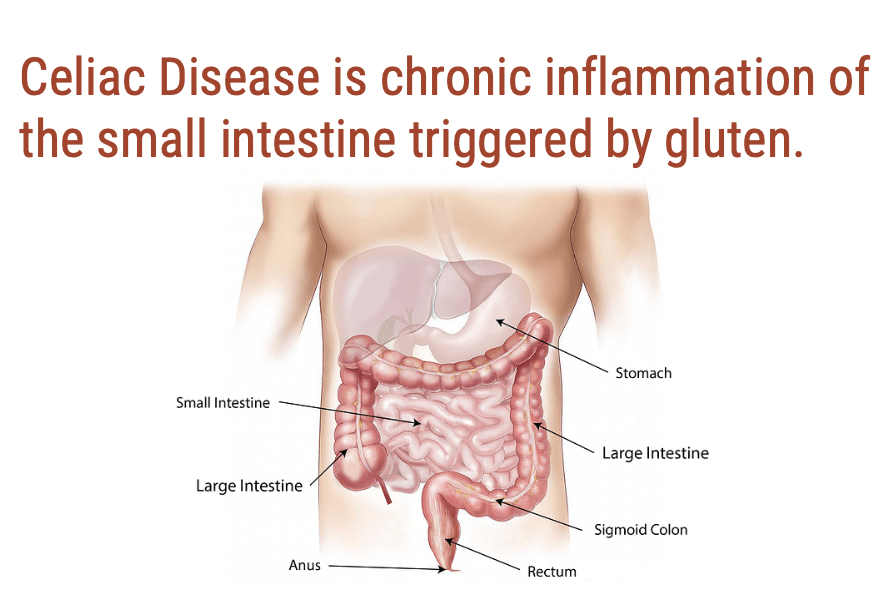
Symptoms of celiac disease
Celiac disease is often undiagnosed or diagnosed later in life due to the nature of vague symptoms.
- Unintentional weight loss
- Diarrhea
- Fatty stool
- Flatulence
- Abdominal pain
- Feeling tired or weak
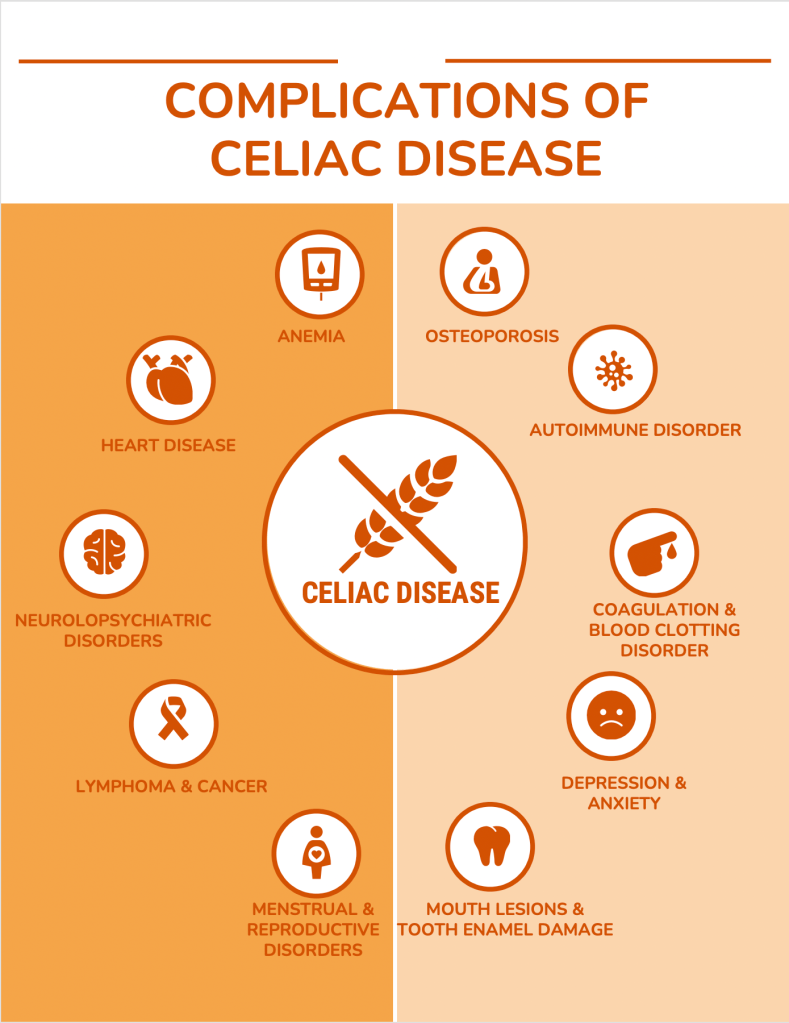
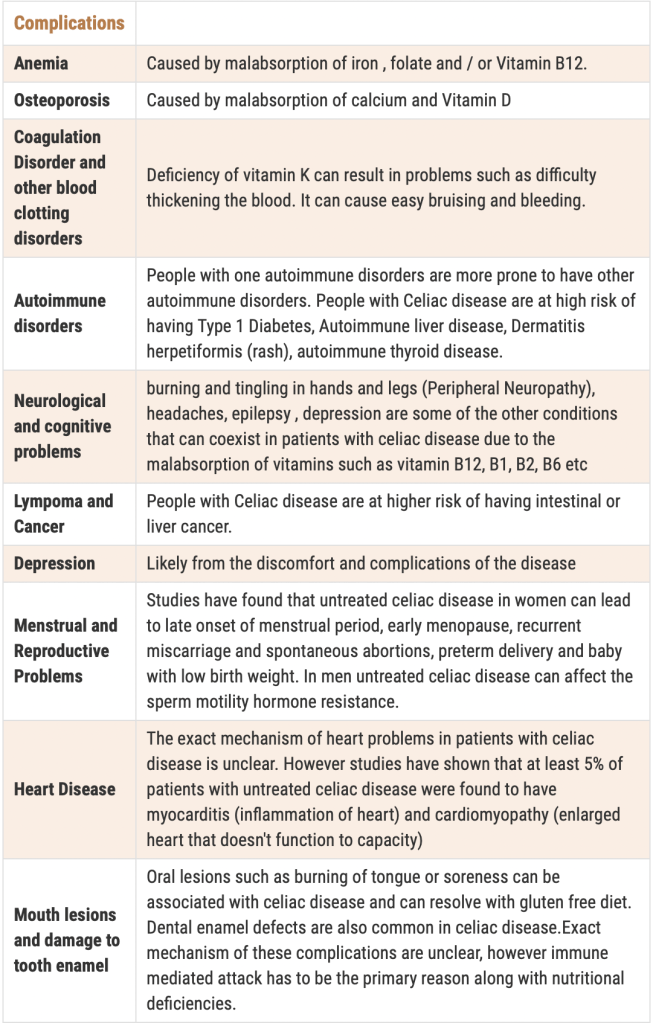
complications of celiac disease
Untreated celiac disease causes malabsorption of nutrients and therefore can contribute to many other comorbidities.
management of celiac disease
Glutten containing food is the trigger for Celiac disease and its complications. Avoiding Gluten in diet for life long can keep the disease under control and reduce the risks of other comorbidities. General American diet contains a ton of Gluten and therefore it takes serious commitment and lifestyle changes.
- Avoid any foods containing Rye, Barley, Oats, Malt, Yeast and Wheat
- Distilled alcoholic beverages and wine are safe to drink. However beers, ales and beverages that are not distilled should be avoided.
- Many patients with celiac disease can also have lactose intolerance. Monitoring for worsening symptoms with dairy products can help avoid them and control the symptoms.

Following a gluten free diet is not easy. It needs a lot of attention and commitment. Transitioning from a regular diet to gluten free diet can take some time. However following a gluten free diet by a person with Celiac disease can see great improvement in their health. Many of us are not aware of the hidden gluten in some foods. It is important to check the ingredients when purchasing any food, especially the processed food.
| Some food items that contain gluten and are often forgotten |
|---|
| Processed food |
| Broths, Soups, seasoning and sauces |
| Cereals |
| Burgers, meatloafs, sausages, deli meat, imitation meat |
| Flavored coffee and Tea |
| Speciality cheeses |
| Oats may be contaminated with wheat |
| frozen food |
Many of the complications from celiac disease are due to nutritional deficiencies. Therefore it is important to replenish the nutrients that are lacking in these patients. Testing and treating Vitamin K, B1, B12, B6, Magnesium, Selenium, Iron , folic acid, since are necessary.
 Mediculous