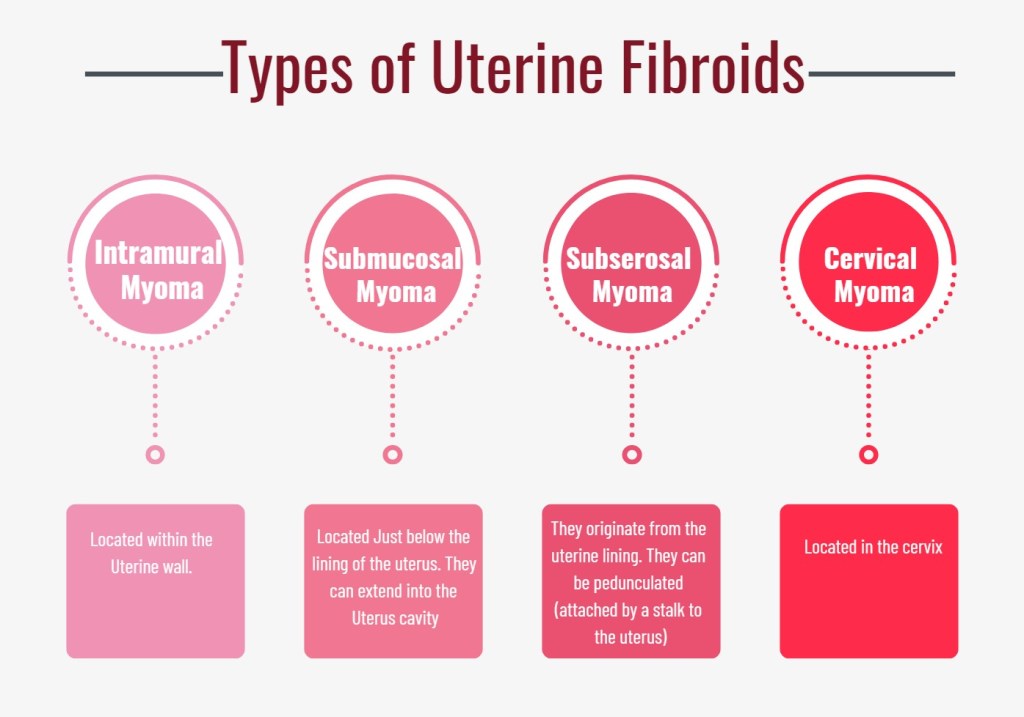
Uterine Fibroids

Uterine Fibroids are the most common benign tumors in reproductive age females. They are not cancerous and can present with or without symptoms. Most of the fibroids are found incidentally on imaging, however 30- 40% of the females with fibroids can be symptomatic.
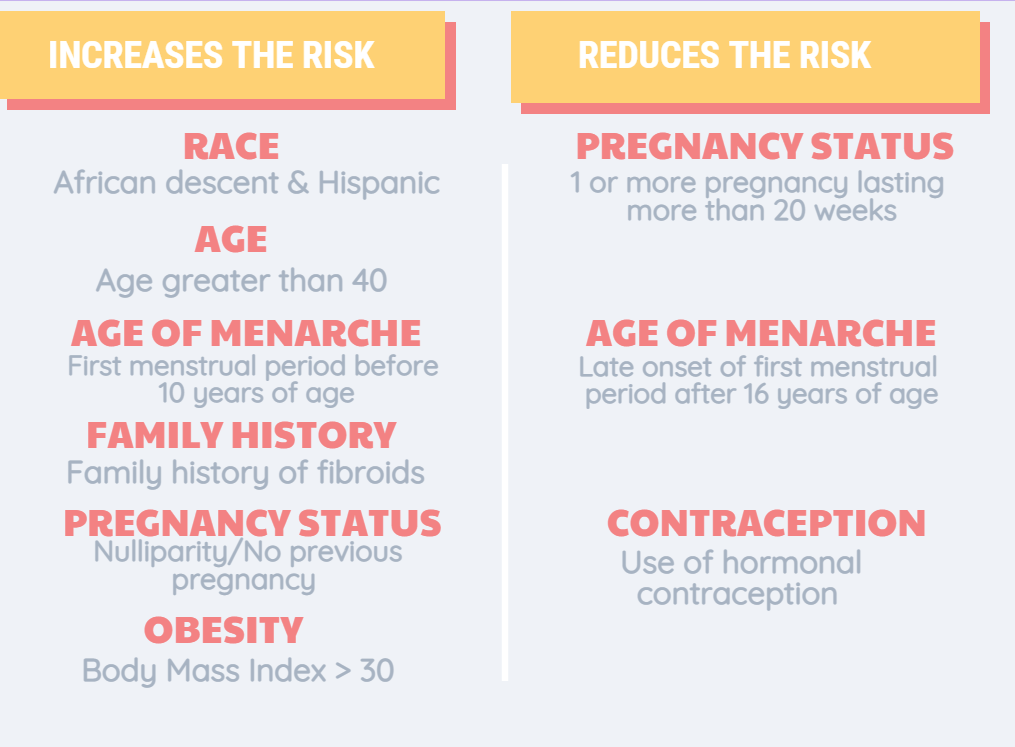
Risk factors associated with Uterine Fibroid

Multiple studies have been performed in the past and have identified certain risk factors to be associated with developing fibroids. African Americans were found to have three times the risk and Hispanic women were found to have two times the risk of developing Uterine fibroids compared to Caucasian women. The risk increases with age in women are in reproductive age and decreases after menopause. Having a family history of Uterine Fibroids increases the likelihood of a women developing it. Studies have shown that early onset of first menstrual period increases the risk of developing fibroids whereas late onset of first menstrual period reduces the risk. Having one or more pregnancy that lasted more than 20 weeks is considered to be a protective factor. similarly being on hormonal contraception protects and reduces the risk of uterine fibroids by managing the hormone production. Obesity can also increase the risk by increasing the estrogen hormone production, which contributes to increase in fibroid size.
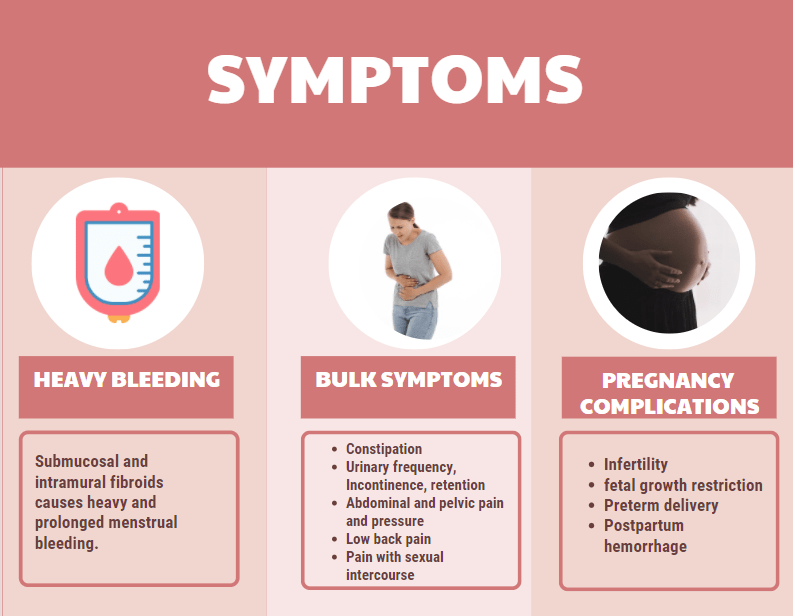
Symptoms and presentation

Many women with fibroids can be asymptomatic. However 30 – 40 % of the women with uterine fibroids can present with symptoms. It is important to recognize the symptoms and seek medical help to prevent the fibroids from growing and causing complications.

The most common symptoms is heavy or prolonged menstrual bleeding. Heavy menstrual bleeding can also contribute to anemia, fatigue and poor quality of life. The location and type of fibroid determines the quantity of bleeding. Submucosal fibroid that extends into the uterus and intramural fibroid contributes to the most bleeding. Subserosal fibroid do not cause heavy bleeding.

Fibromatous uterus is enlarged and can press on other organs causing other complications such as urinary and bowel abnormalities, low back pain, abdominal and pelvic pressure, painful sexual intercourse. When the enlarged uterus compresses on the bladder it can cause increase frequency of urination, urinary incontinence (leaking of urine) and urinary retention (unable to urinate). Constipation is a very common symptom due to the bowels being compressed. Due to the enlarged uterus and weight of the fibroid and women can feel pressure on abdominal and pelvic area and low back pain. Some fibroids depending on the location can also cause pain with deep sexual intercourse. One can also experience an immediate or acute onset of severe pain due to torsion (twisting) of the pedunculated fibroid that is attached by a stalk to the uterus or from breaking down of the fibroid tissue

Many asymptomatic women were found to have fibroids while being evaluated for infertility. Submucosal or intramural fibroids causes irregularities in uterine cavity and causes difficulty to conceive. Uterine fibroids can also cause complications in pregnancy and during delivery and therefore needs thorough evaluation and additional close care during pregnancy.
Management & Treatment

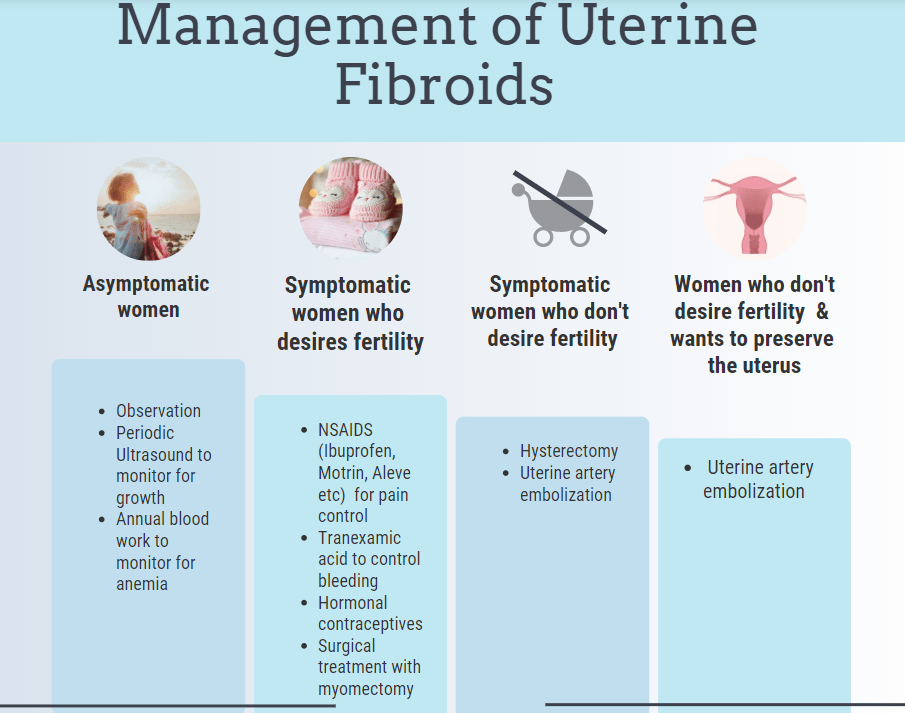
For women who are not symptomatic wait and watch approach is safe. Periodic ultrasounds to monitor growth of fibroids and blood work to evaluate for anemia is sufficient in those patients as the fibroids can grow and regress with time.

Treatment options vary based on the size and location of the fibroids, symptoms and desire of future pregnancy. There are medications to simply treat the symptoms such as heavy bleeding and pelvic pain. Tranexamic acid reduces the bleeding without shrinking the fibroids. For pelvic pain NSAIDS such as Ibuprofen, Aleve, Naproxen, Motrin can be helpful. On the other hand there are hormonal contraception medications and devices (Intrauterine device IUD such as Mirena) that can treat the fibroids by shrinking them. Surgical procedures such as laparoscopic or open abdominal myomectomy is used to remove the fibroids and to preserve fertility. Laparoscopic myomectomy is least invasive robotic surgery and is a good option with few risk of complications for few small fibroids. Large , multiple fibroids and submucosal fibroids may need open abdominal myomectomy in which a large abdominal incision is made to open the abdomen to access the uterus. Hysterectomy and uterine artery embolization is a good option for women who do not desire future pregnancy. Uterine artery embolization is suitable for women who do not desire future pregnancy but wants to keep the uterus. It works by discontinuing the blood supply to the fibroid which results in regression of the fibroid.
Dysmenorrhea (Menstrual Abnormality)

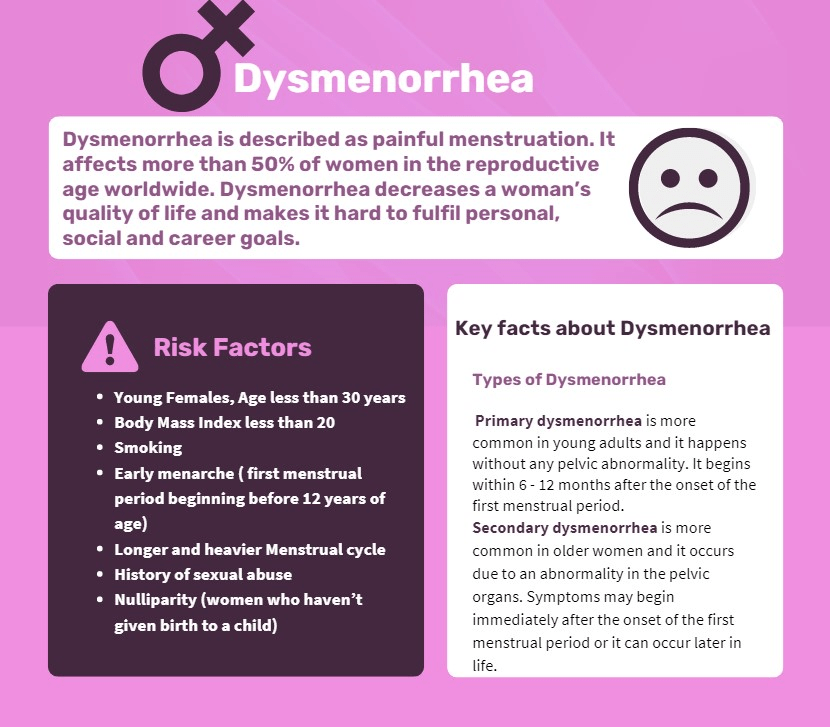
Dysmenorrhea is described as painful menstruation. It affects more than 50% of women in the reproductive age worldwide. Dysmenorrhea decreases a woman’s quality of life and makes it hard to fulfil personal, social and career goals. It is therefore very important to create awareness of dysmenorrhea and ways to manage the symptoms. 

There are two types of dysmenorrhea. Primary and secondary dysmenorrhea. Primary dysmenorrhea is more common in young adults and it happens without any pelvic abnormality. It begins within 6 – 12 months after the onset of the first menstrual period. Secondary dysmenorrhea is more common in older women and it occurs due to an abnormality in the pelvic organs. Symptoms may begin immediately after the onset of the first menstrual period or it can occur later in life.

Risk Factors for Dysmenorrhea

  • Young Females, Age less than 30 years
  • Body Mass Index less than 20 
  • Smoking 
  • Early menarche ( first menstrual period beginning before 12 years of age)
  • Longer and heavier Menstrual cycle 
  • History of sexual abuse
  • Nulliparity (women who haven’t given birth to a child)

Causes of Secondary Dysmenorrhea

Management of Dysmenorrhea

For primary Dysmenorrhea treatment is aimed to provide comfort from cramping pain and symptoms. NSAIDS such as ibuprofen, Advil, Motrin, Naproxen, Aleve, etc provide better pain relief than Acetaminophen (Tylenol). Hormonal therapies such as hormonal contraceptives including pills, IUDs (Mirena), implantable devices (Nexplanon), depo provera injection, Patches and vaginal rings can also be beneficial in controlling symptoms. Same treatment options can also be used in secondary dysmenorrhea, however identifying and treating the cause of the secondary dysmenorrhea can be necessary in controlling the problem. This can include medical management or surgical options. 

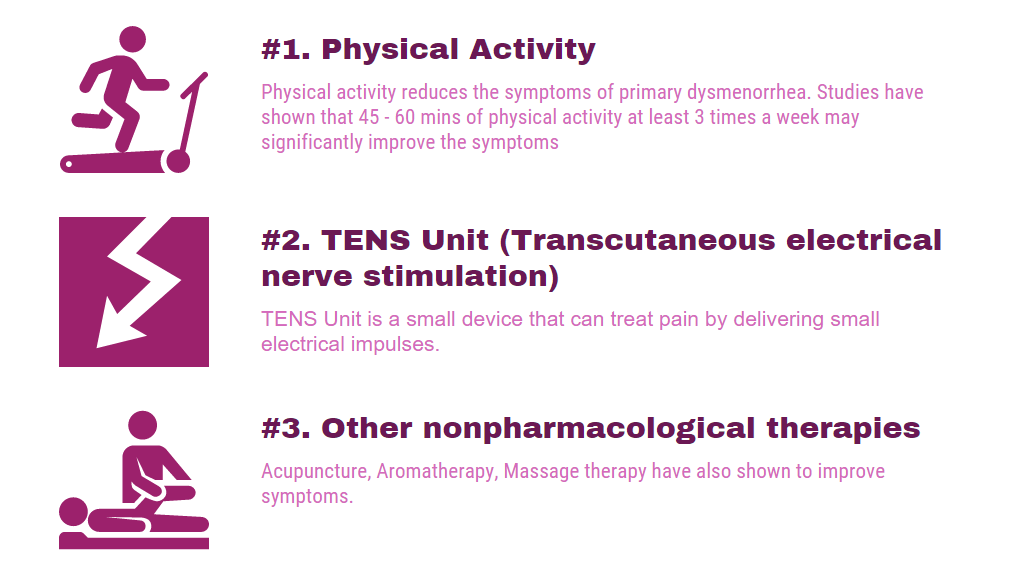
Lifestyle and Behavioral Remedies

Cervical Cancer Screening

Pap test is used to screen for early signs of cervical cancer. Globally, cervical cancer accounted for an estimated 528,000 new cancer cases worldwide and for 266,000 deaths in 2012. Cervical cancer is the third most common cancer diagnosis and cause of death among gynecologic cancers in the United States. In the United States, almost 13,000 new cases of invasive cervical cancer and approximately 4100 cancer-related deaths occur each year.  

Risk Factors for Cervical Cancer

  • Early onset of sexual activity  
  • Multiple sexual partners 
  • A high-risk sexual partner (ex, a partner with multiple sexual partners or known HPV infection) 
  • History of sexually transmitted infections (ex, Chlamydia infection, genital herpes) 
  • History of vulvar or vaginal neoplasia or cancer (HPV infection is also the etiology of most cases of these conditions) 
  • Immunesuppression (ex, human immunodeficiency virus infection – HIV) 
  • Smoking  

What is a Pap test? 

To do a Pap test, your doctor will push apart the walls of your vagina using a device called a speculum. Then, your doctor will use a small tool to gently scrape cells from your cervix. This process can be uncomfortable but should not hurt. Taking deep breath and trying not to clench the vaginal muscles will help ease the process. The pathologist will then look at the cells under a microscope to see if they are abnormal. 

When should a woman start having Pap tests? 

Women should start having Pap tests when they turn 21. They do not need to be sexually active before they start getting Pap tests. Until 30 years of age pap test is performed every 3 years as long as the results are within normal limits. When they turn 30, their doctors might also suggest doing another test to check for cervical cancer, called an HPV test. When pap test is combined with HPV test it increases the accuracy and therefore can be repeated every 5 years if the results are normal.  

Women age 65 and older should stop having Pap tests if they meet all of these requirements: 

  • They have never smoked. 
  • They do not have a new sex partner since their last Pap test. 
  • They had Pap tests done regularly until they turned 65. 
  • They had 3 normal Pap tests in a row. 
  • They had no abnormal Pap tests in the past 10 years. 

Do you need to get Pap tests if you had the HPV vaccine? 

Yes. You still need to get Pap tests if you got the HPV vaccine.  Getting the HPV vaccine reduces your chances of getting cervical cancer since the virus that causes the cervical cancer is HPV. But it does not completely protect you. You still need to have pap test to check for cancer. 

Do you need to get Pap tests if you had a hysterectomy?  

There are two types of Hysterectomy, complete and partial. Cervix is removed along with the uterus in complete hysterectomy and in that case, you will no longer need pap test as long as there are no abnormal pap test in the past. However, if you have partial Hysterectomy with the cervix intact, you still need pap test.  

What can you do to prevent Cervical cancer?  

  • Avoid Smoking 
  • Avoid Multiple sexual partners
  • Get HPV Vaccine if you are in the age range
  • Get tested for HPV and cervical abnormality
  • Use Condom for sexual intercourse