
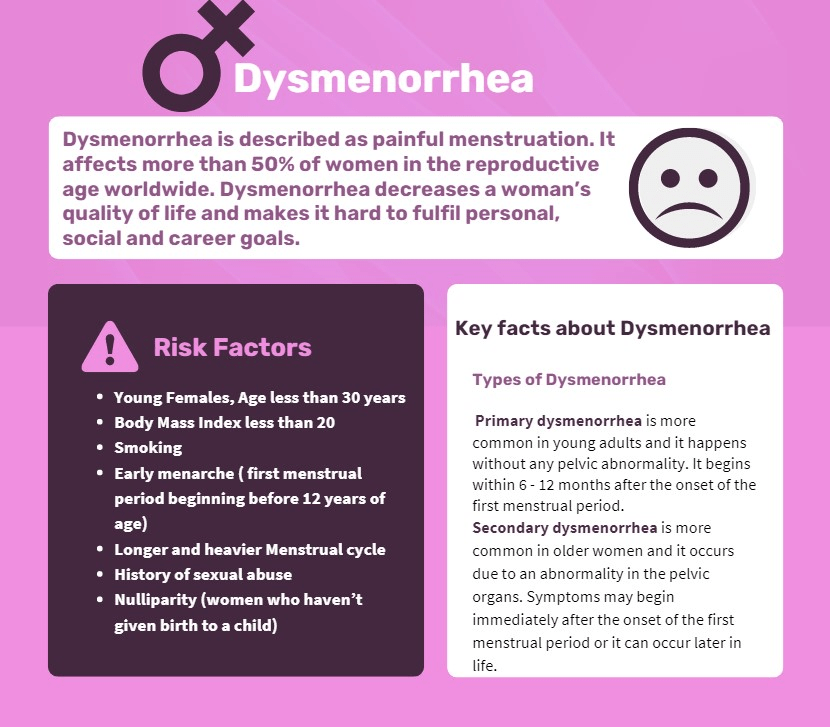
Dysmenorrhea is described as painful menstruation. It affects more than 50% of women in the reproductive age worldwide. Dysmenorrhea decreases a woman’s quality of life and makes it hard to fulfil personal, social and career goals. It is therefore very important to create awareness of dysmenorrhea and ways to manage the symptoms.
There are two types of dysmenorrhea. Primary and secondary dysmenorrhea. Primary dysmenorrhea is more common in young adults and it happens without any pelvic abnormality. It begins within 6 – 12 months after the onset of the first menstrual period. Secondary dysmenorrhea is more common in older women and it occurs due to an abnormality in the pelvic organs. Symptoms may begin immediately after the onset of the first menstrual period or it can occur later in life.
Risk Factors for Dysmenorrhea
- Young Females, Age less than 30 years
- Body Mass Index less than 20
- Smoking
- Early menarche ( first menstrual period beginning before 12 years of age)
- Longer and heavier Menstrual cycle
- History of sexual abuse
- Nulliparity (women who haven’t given birth to a child)
Causes of Secondary Dysmenorrhea

Management of Dysmenorrhea
For primary Dysmenorrhea treatment is aimed to provide comfort from cramping pain and symptoms. NSAIDS such as ibuprofen, Advil, Motrin, Naproxen, Aleve, etc provide better pain relief than Acetaminophen (Tylenol). Hormonal therapies such as hormonal contraceptives including pills, IUDs (Mirena), implantable devices (Nexplanon), depo provera injection, Patches and vaginal rings can also be beneficial in controlling symptoms. Same treatment options can also be used in secondary dysmenorrhea, however identifying and treating the cause of the secondary dysmenorrhea can be necessary in controlling the problem. This can include medical management or surgical options.
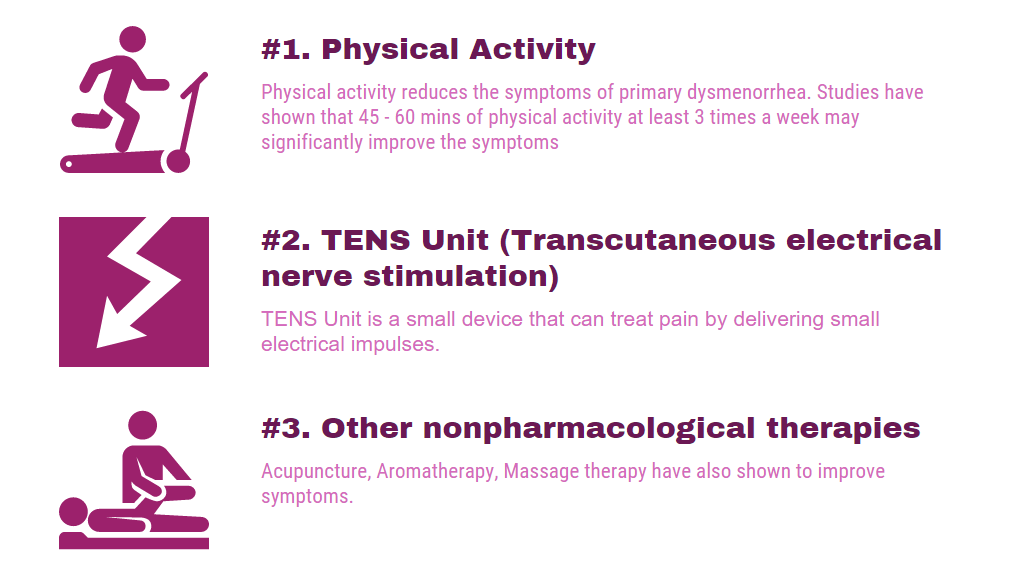
Lifestyle and Behavioral Remedies
 Mediculous