
What is psoriatic arthritis?
Psoriasis is an immune mediated chronic inflammatory skin disease and Psoriatic arthritis is defined by joint pain, swelling and inflammation in people who have psoriasis . Approximately 20-30% of people who have psoriasis also has Psoriatic Arthritis.
Psoriasis happens because of increased skin growth due to overactive immune system. Skin cells grow and shed as part of a normal cycle, in Psoriasis instead of cells shedding, new cells stack up on top of the old cells causing plaques.
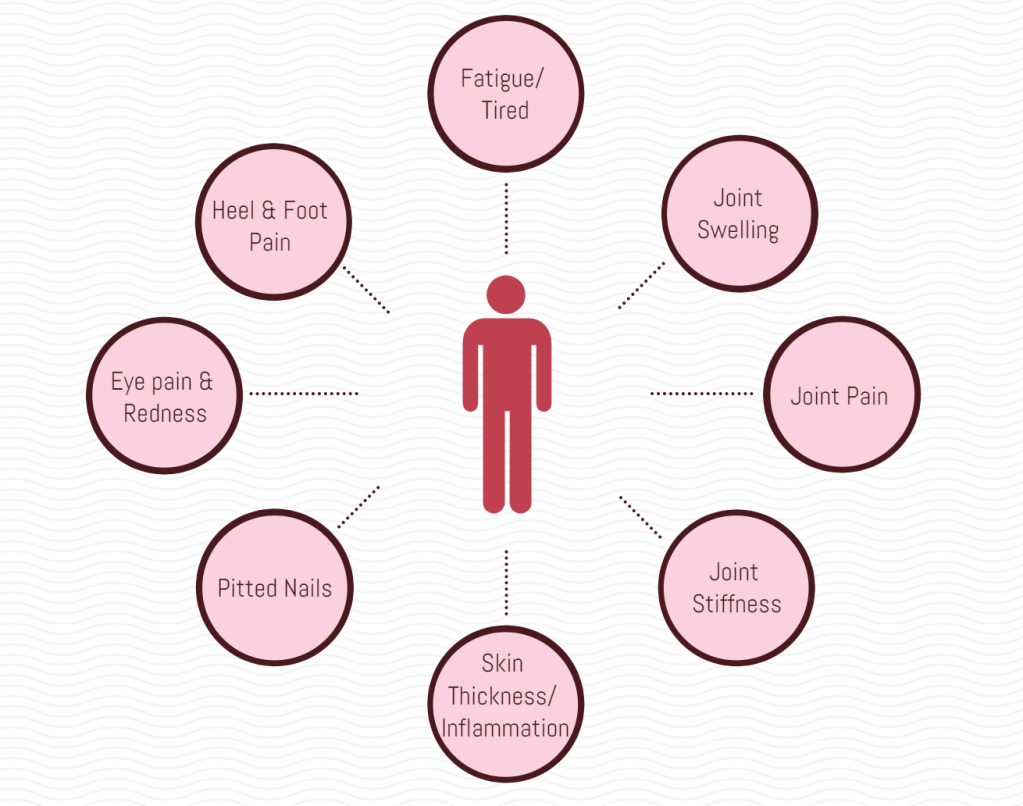
Overactive immune system can also cause inflammation in other parts of the body. When there is inflammation in the joints it causes swelling, stiffness and pain of the joints. This is called Psoriatic arthritis.
What are the symptoms of Psoriasis / Psoriatic arthritis?
Epidemiology and causes
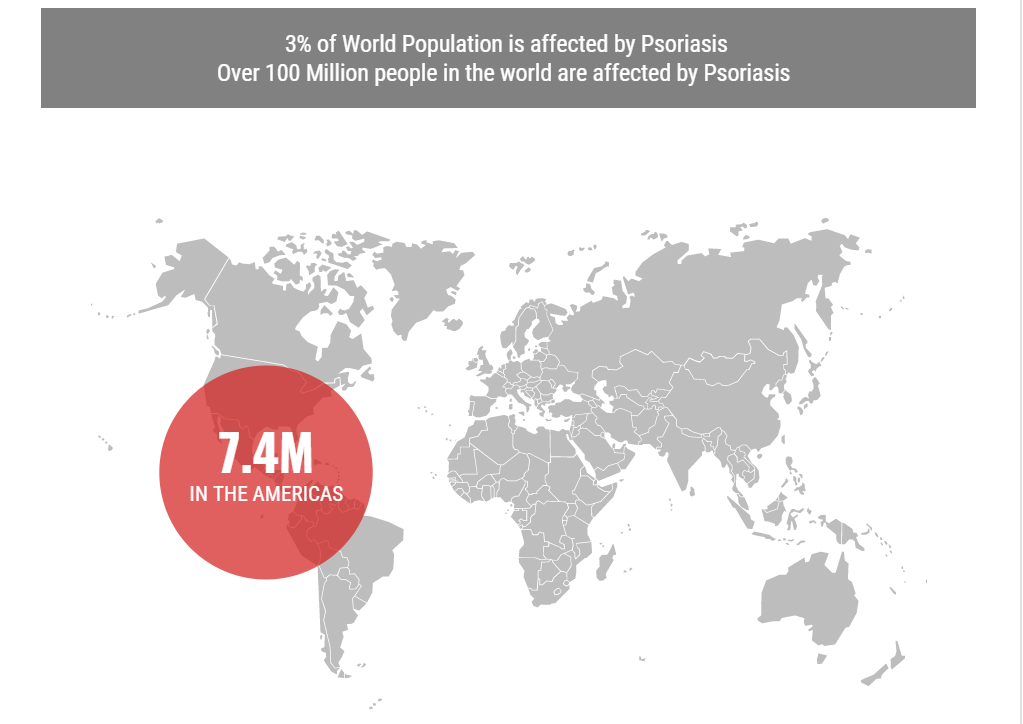
In 2013 it was estimated that 7.4 million adults in United States have Psoriasis and or Psoriatic arthritis. Approximately 100 million people were affected by Psoriasis in the world. Psoriasis can occur at any age, however it is less common in children. It affects men and women equally.
The exact cause of Psoriasis is still unknown. However Genetics and immune system plays a role in psoriasis. You can have psoriasis without any family history of immune disorders. Stress, Lack of sleep , Cold weather , illness, smoking, Heavy alcohol consumption can all trigger the flare up episodes.
PSORIASIS IS NOT CONTAGIOUS
How is Psoriasis treated?
- Thick emollients – Thick creams such as petroleum jelly is recommended to keep the skin soft and moist. By keeping the skin soft and moist once can reduce itchiness and pain.
- Corticosteroids – Topical corticosteroids can reduce inflammation and help with the patches and itchiness. Corticosteroids come in different strengths and potency, discuss with your doctor to find the best suitable potency for you. When steroid creams are used for a long period of time it can cause thinning of the skin and skin discoloration.
- Topical Vitamin D – Topical Vitamin D analogs alone or in combination with other treatment can help with psoriasis.
- Phototherapy- Phototherapy is provided by dermatologist where UV radiation is used to reduce the overgrowth of skin cells and to reduce the inflammation. There is a slight risk of skin cancer due to the UV radiation and careful monitoring is required by a professional.
- Salt water bath – Bathing in sea water and exposing yourself to natural sunlight can help with psoriasis
How is psoriasis and psoriatic arthritis treated?
So far there is no cure that has been found for psoriasis or psoriatic arthritis. However there are treatment options available to treat the symptoms and to reduce or avoid flare ups. There are multiple clinical trials ongoing throughout the world to find a cure.
Temporary Pain relief
- Anti Inflammatory medications such as NSAIDS (Ibuprofen, Advil, Motrin, naproxen, Alleve) can provide temporary relief with joint pain and stiffness
- Steroids such as prednisone and methylprednisolone can also reduce the inflammation and treat the symptoms.
- Applying heat to the affected joints can reduce the pain and stiffness, especially in the mornings
- Physical Therapy can strengthen your muscles and help ease the weight on your joints. It can also help with increasing flexibility
- Custom Orthotics are special shoe inserts that you can slip inside your shoes to provide additional support to your feet, heels and ankles.
Maintenance medications
- There are maintenance medications your Rheumatologist can prescribe you to keep the symptoms under control and to avoid or reduce flare ups
- Methotrexate is the first line medication that is commonly used and is called the disease modifying anti-rheumatic drug (DMARD). It comes in pills and injection. It works by suppressing the immune system. Patients who use methotrexate should not drink alcohol.
- If methotrexate is not efficient for you or if you can’t tolerate the side effects there are other medications your doctor can prescribe for psoriasis and psoriatic arthritis.
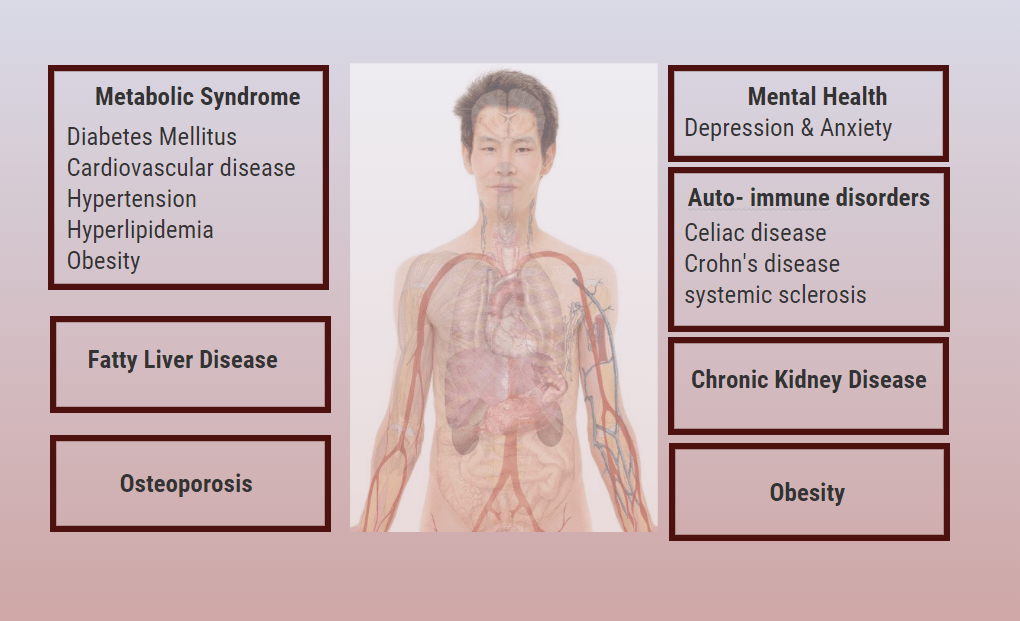
Comorbidities Associated with Psoriasis
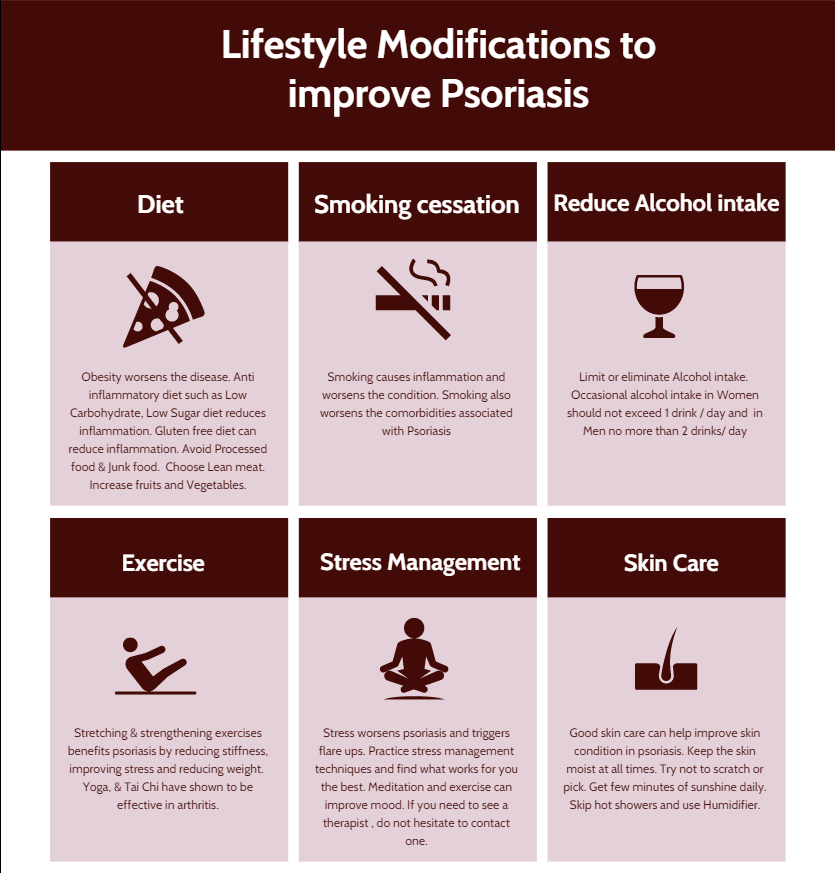
Lifestyle Modifications that are shown to Improve the disease
 Mediculous