Polycystic Ovary Syndrome (PCOS)

PCOS affects 5- 10% of women in the reproductive age. The exact cause of PCOS is not known, however several factors together contribute to the complications of PCOS.These contributing factors are Insulin resistance , Increased hormones known as androgens and irregular menstrual cycle.

Symptoms

Patients may present with some or all of the following symptoms.
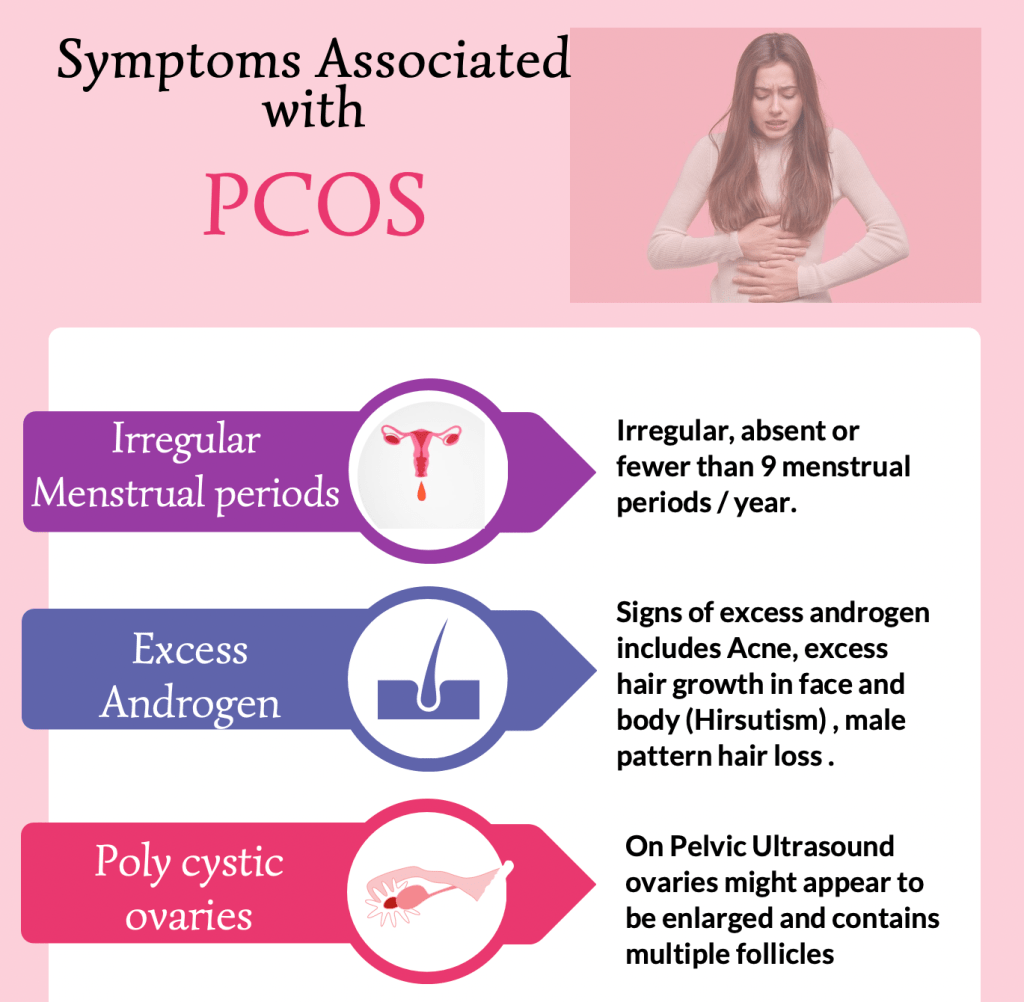
  • Irregular menstrual cycle
  • Acne
  • Excess hair growth in face, chest, abdomen or inner thighs
  • Obesity (Although 20% of women with PCOS are not obese)
  • Male pattern hairloss
  • Patches of thick, velvet like dark skin (also known as Acanthosis Nigricans)

Getting a diagnosis of PCOS

Your doctor can diagnose you with PCOS when you have 2 or more of the following.

  • Irregular menstrual periods (infrequent or absent menstrual period)
  • Hirsutism (Increased hair growth in face, chest, abdomen or inner thighs) and / or increase blood testosterone levels
  • Polycystic ovaries (fluid filled spaces in the ovary) in ultrasound

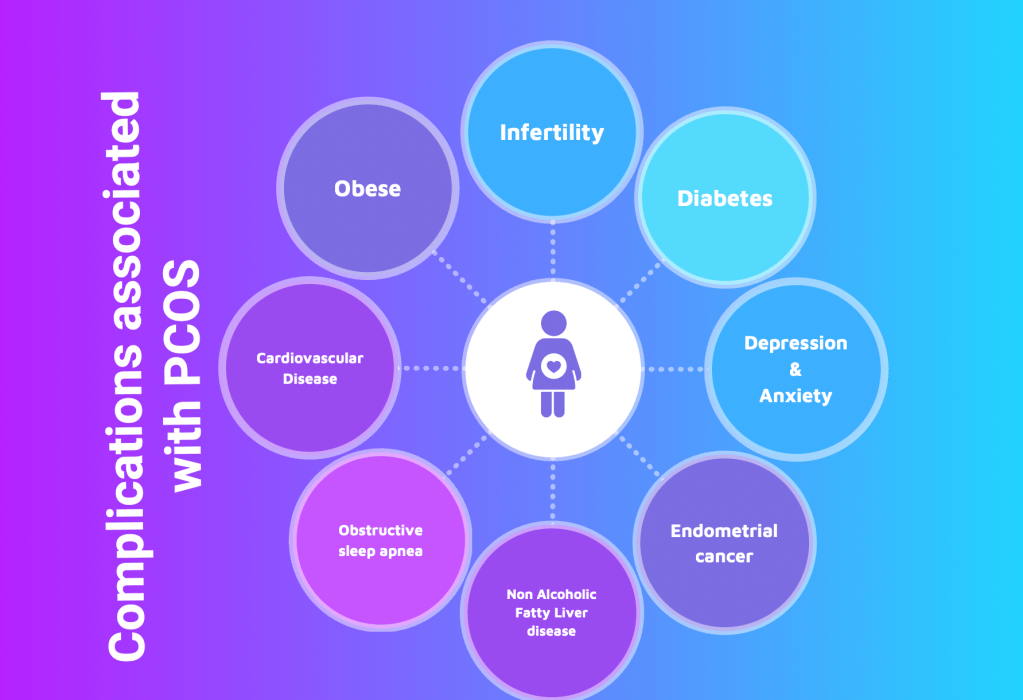
Complications related to PCOS

  • Diabetes Mellitus
  • Obesity
  • Sleep Apnea
  • Cardiovascular disease
  • Depression
  • Endometrial Cancer
  • Infertility & miscarriage

Management and Treatment options

Weight loss

Weight loss is the first step of treating PCOS. Losing weight can restore ovulation cycles and improve or reduce the risk of metabolic complications. Changing diet by reducing Carbohyrdate and sugar rich food and incorporating exercise as part of the lifestyle can help with the weight loss.

Contraception

Combined oral contraception (birth control) can help with regulating the menstrual cycles and to help with the androgenic effects such as acne and excess hair growth. It can also give endometrial protection and reduce the risk of endometrial hyperplasia and cancer.
HYPERTHYROIDISM

Hyperthyroid is a disorder that occurs when the thyroid overacts and produces more thyroid hormone than usual. Thyroid hormone acts on various parts of the body contributing to multiple necessary body functions. However, It becomes a problem when there is an excess in thyroid hormone. Most common cause of overacting thyroid in North America is Autoimmune conditions such as Graves disease. Autoimmune disorder is a malfunction in our immune system causing it to attack our own body. Other conditions that can cause hyperthyroid is thyroid nodules and Thyroiditis.

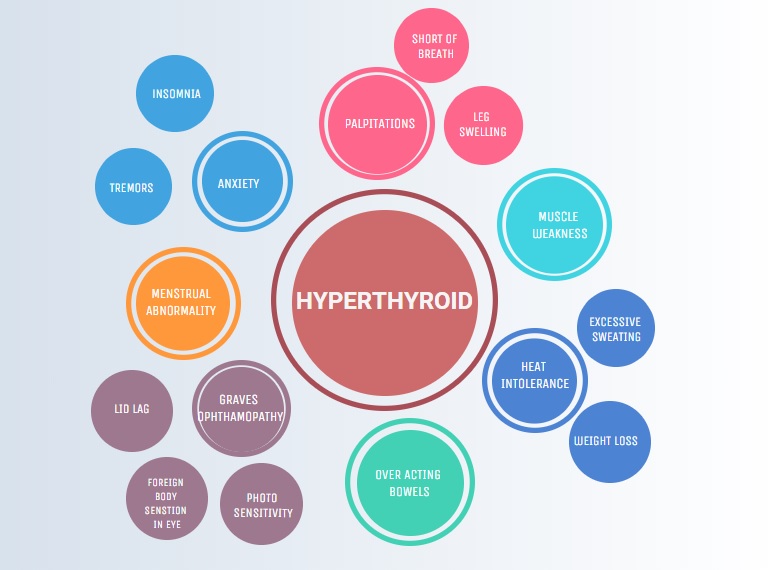
SIGNS & SYMPTOMS

  • Cardiovascular
    • Palpitations
    • leg swelling due to Heart Failure (Long term untreated hyperthyroidism can cause Heart Failure)
    • Shortness of Breath
  • Neuropsychiatry
    • Anxiety
    • Pressured speech
    • Tremors
    • Psychosis
    • Insomnia (sleeping problems)
  • Endocrinology
    • Heat Intolerance
    • Excessive sweating
    • Weight loss despite increased appetite
    • Overacting bowels
  • Eyes
    • Inability to close the eyes completely
    • Increased photo sensitivity
    • Foreign body sensation in the eye
    • Increased tearing
    • Lid lag
  • Musculoskeletal
    • Muscle weakness
  • Genitourinary
    • Menstrual abnormality
Signs & Symptoms of Hyperthyroid

High risk population

Even though Hyperthyroidism cannot be prevented it occurs more in certain population than others .

  • Females
  • People with Family history of Thyroid or Autoimmune disorders
  • Excessive Iodine consumption

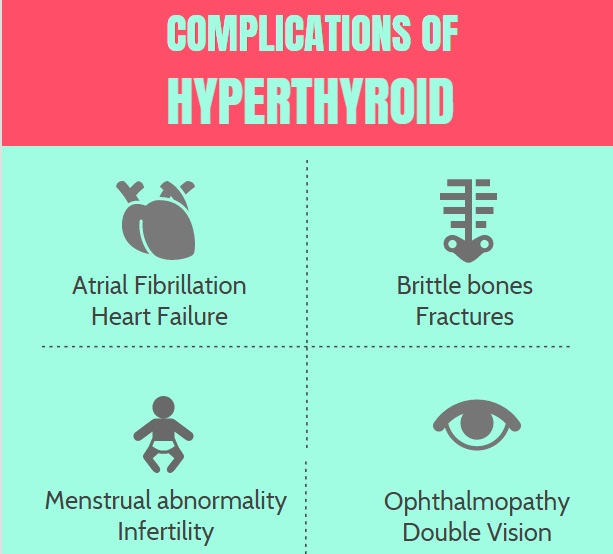
Complications of Hyperthyroid

  • Heart Problems
    • Long standing uncontrolled Hyperthyroid can cause Atrial Fibrillation (irregular heart beating ) and Heart Failure
  • Bone Problems
    • Hyperthyroid affects the absorption of calcium and therefore cause weak bones and increase the risk of fracture
  • Infertility
    • Excessive thyroid hormone cause menstrual abnormality and can cause difficulty getting pregnant
  • Eye Problems
    • Hyperthyroid can affect the muscles around the eyes causing a lid lag or graves ophthalmopathy. Inability to close the eyes completely due to pulling of eye muscle can result in dry eyes. It can also cause double vision.

treatment

There are different ways to treat Hyperthyroid depending on your age, health and severity. Talk to your doctor about the treatment options that would be best for you.

  • Anti thyroid medications
  • Radioative Iodine
  • Surgery (Thyroidectomy)
  • Medications to control your symptoms