PCOS affects 5- 10% of women in the reproductive age. The exact cause of PCOS is not known, however several factors together contribute to the complications of PCOS.These contributing factors are Insulin resistance , Increased hormones known as androgens and irregular menstrual cycle.
Symptoms
Patients may present with some or all of the following symptoms.
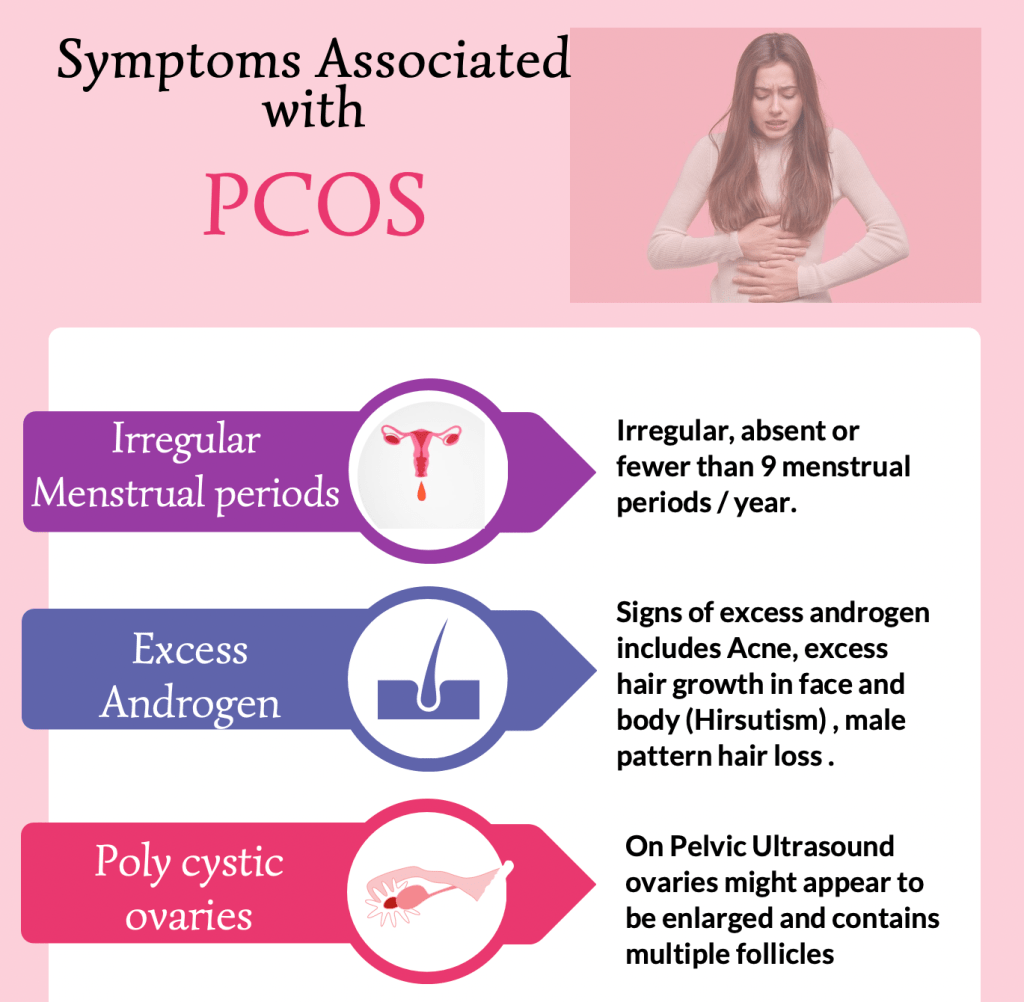
- Irregular menstrual cycle
- Acne
- Excess hair growth in face, chest, abdomen or inner thighs
- Obesity (Although 20% of women with PCOS are not obese)
- Male pattern hairloss
- Patches of thick, velvet like dark skin (also known as Acanthosis Nigricans)
Getting a diagnosis of PCOS
Your doctor can diagnose you with PCOS when you have 2 or more of the following.
- Irregular menstrual periods (infrequent or absent menstrual period)
- Hirsutism (Increased hair growth in face, chest, abdomen or inner thighs) and / or increase blood testosterone levels
- Polycystic ovaries (fluid filled spaces in the ovary) in ultrasound
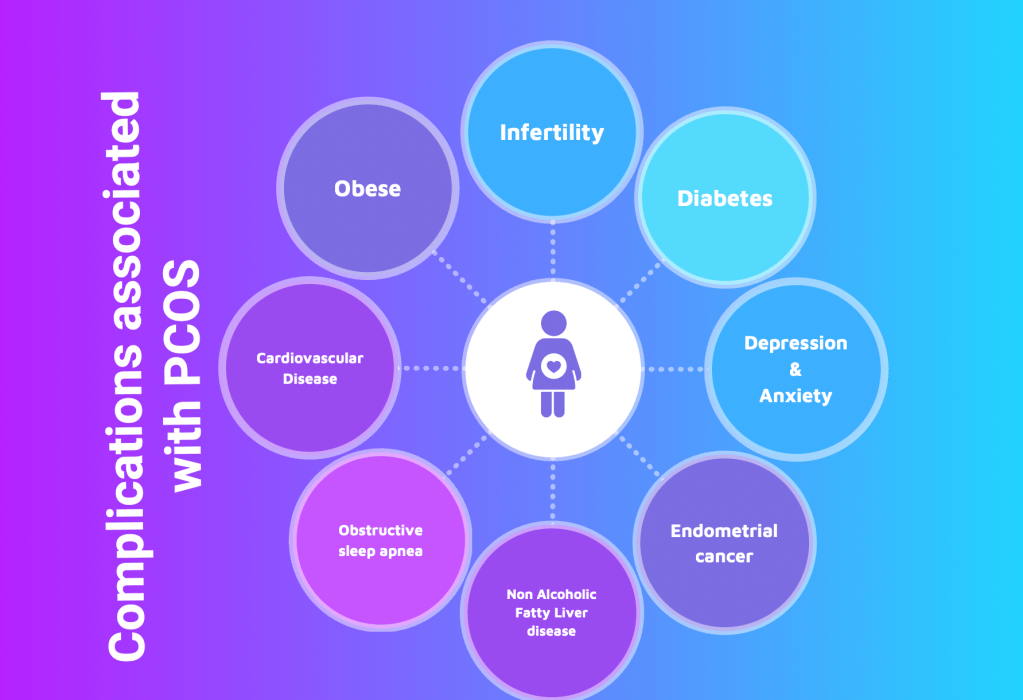
Complications related to PCOS
- Diabetes Mellitus
- Obesity
- Sleep Apnea
- Cardiovascular disease
- Depression
- Endometrial Cancer
- Infertility & miscarriage
Management and Treatment options
Weight loss
Weight loss is the first step of treating PCOS. Losing weight can restore ovulation cycles and improve or reduce the risk of metabolic complications. Changing diet by reducing Carbohyrdate and sugar rich food and incorporating exercise as part of the lifestyle can help with the weight loss.
Contraception
Combined oral contraception (birth control) can help with regulating the menstrual cycles and to help with the androgenic effects such as acne and excess hair growth. It can also give endometrial protection and reduce the risk of endometrial hyperplasia and cancer.
 Mediculous